
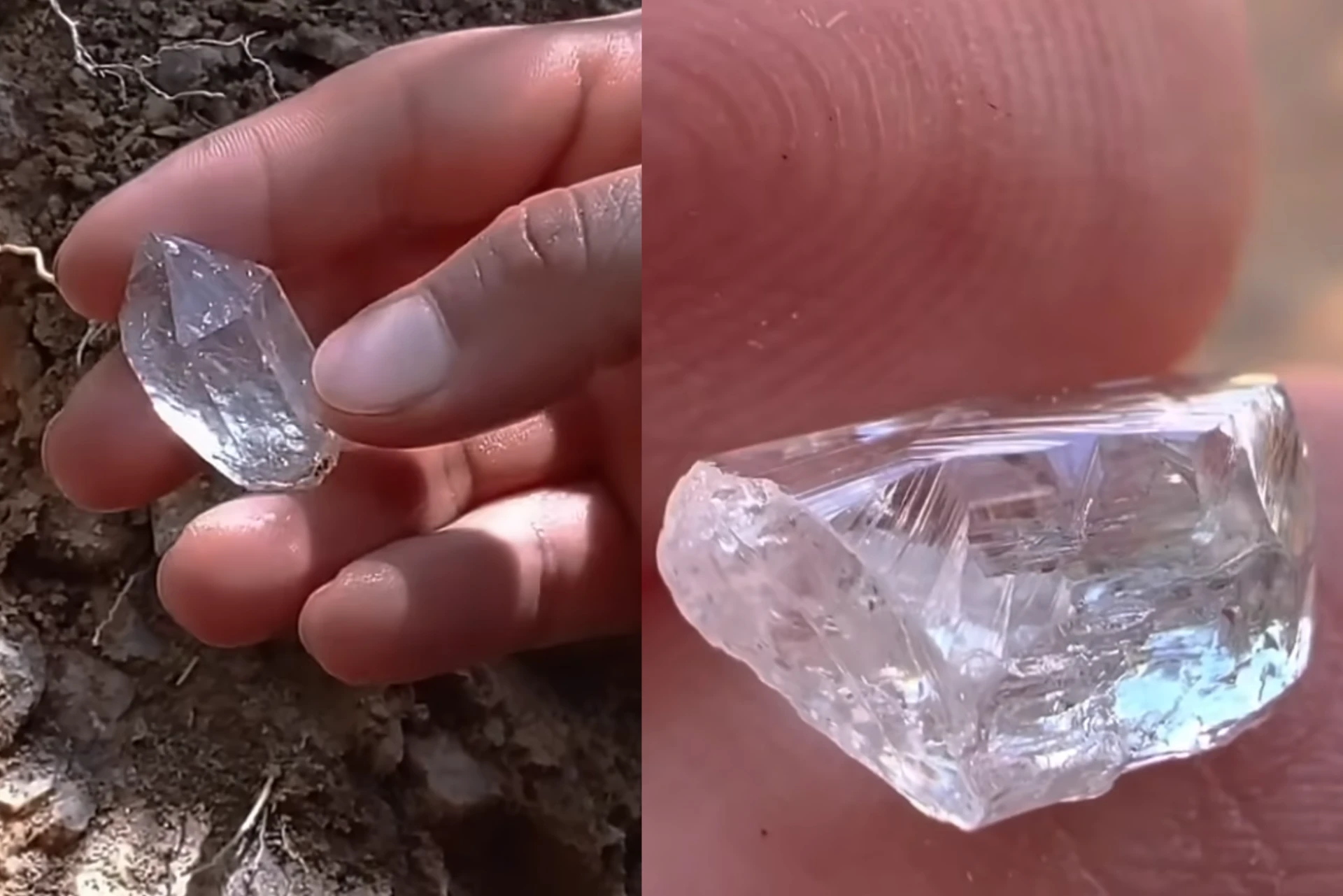
What are Earth Mined Diamonds?
Mined diamonds also known as natural diamonds are the crystalline carbon structures formed deep within the Earth over billions of years and extracted through mining.
Diamonds are best known as gemstones, but only about 20% of the world’s diamond production by weight is used in jewelry. The remaining 80%, often referred to as bort, is used in industrial and research applications.
As the hardest naturally occurring material, diamonds are widely used as abrasives for cutting, drilling, grinding, and polishing. These applications account for much of the industrial demand for diamonds.
Diamonds also have exceptionally high thermal conductivity at room temperature. This makes them useful for dissipating heat from electronic components, including computer systems and diode lamps.
| Characteristic | Mined Diamond |
|---|---|
| Age | 1–3 billion years old |
| Formation | Formed about 100-150 miles beneath Earth’s surface where extreme temperatures (1,000–1,300°C) and pressures exceeding 45,000 times atmospheric pressure exist |
| Surface exposure | Carried upward by volcanic eruptions 300–400 million years ago |
| Annual global recovery | 1ct small enough to fit inside a single exercise ball5ct small enough to fit inside a standard basketball |
| Significant mines worldwide | Only about 30-35 currently in production, only 7 classified as Tier 1 deposits (holding $20B+ reserves) |
| Distinguishable from lab-grown diamonds? | Yes, using professional gemological instruments |
| Resale value | Historically reported to appreciate by ~3% annually over 35 years |
These stones are genuinely rare. Over the past 140 years, geologists have examined nearly 7,000 kimberlite pipes across the world, the volcanic rock formations that transport diamonds toward Earth’s surface. Yet fewer than only 60 have contained enough diamonds to be commercially eligible for mining. That puts the odds of discovering a commercially viable deposit at less than 1%.
The 4Cs of Earth-Mined Diamonds
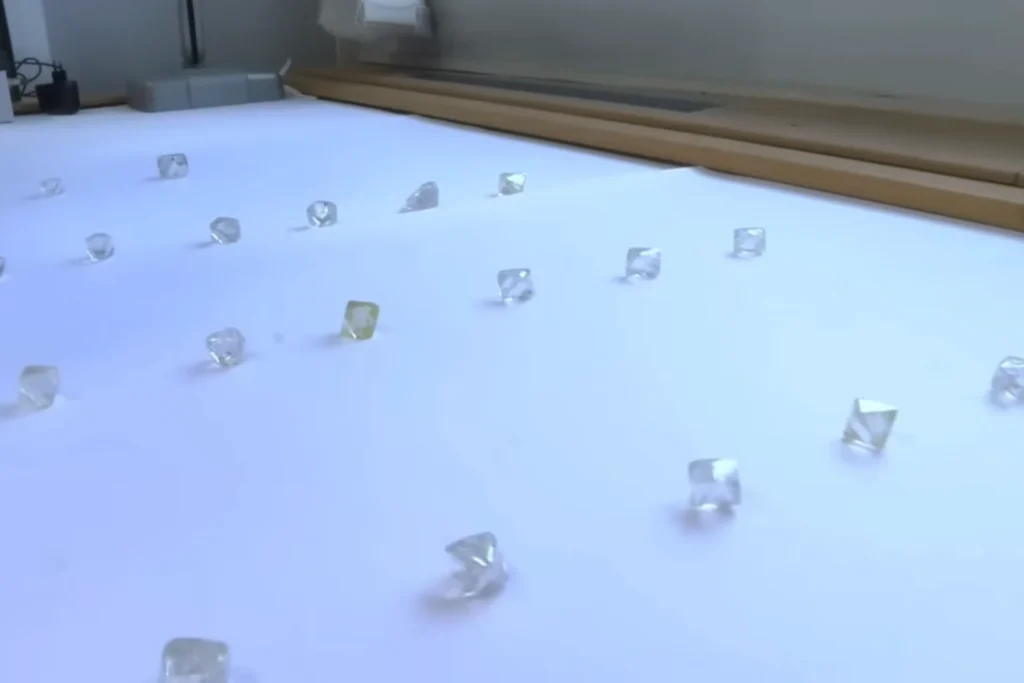
Understanding diamond quality is essential when choosing a natural, earth-mined diamond. The Gemological Institute of America (GIA) developed the 4Cs; Carat, Cut, Color, and Clarity as a standardized system for evaluating diamond quality.
- Carat – Refers to the diamond’s weight. Larger natural diamonds are generally rarer and can command higher prices, although carat weight alone does not determine value.
- Cut – Describes how well a diamond’s proportions, symmetry, and facets interact with light. A well-cut diamond reflects more light, creating greater brilliance and sparkle.
- Color – Measures how much body color a diamond has. The standard scale ranges from D (colorless) to Z (light yellow or brown). Diamonds with less visible color are generally considered more valuable, all else being equal.
- Clarity – Evaluates the presence, size, location, and visibility of internal inclusions and external blemishes. Since natural diamonds form under geological conditions, many contain characteristics that developed during their formation.
Certification and Trust

A grading report can provide important information when purchasing an earth-mined diamond. Reputable laboratories such as the GIA and IGI assess diamonds and document characteristics such as the 4Cs, measurements, and other identifying details.
A diamond grading report helps you:
- Verify the diamond’s reported characteristics.
- Compare stones more accurately.
- Keep a record of the diamond for insurance and other purposes.
For a significant purchase, it is generally advisable to request a grading report from a reputable gemological laboratory and make sure the report details match the diamond you are buying.
Difference Between Lab Grown and Natural Diamonds
Lab-grown and natural diamonds are both real diamonds with essentially the same chemical composition, crystal structure, and physical properties. The main difference is where and how they form.
In terms of appearance and basic physical properties, however, both are diamonds. The differences become more apparent in areas such as origin, rarity, production method, and price.
| Feature | Lab-Grown Diamond | Natural Diamond |
|---|---|---|
| Origin | Created in a controlled laboratory environment | Formed naturally deep within the Earth |
| Formation Time | Usually produced in weeks | Forms over billions of years |
| Composition | Crystalline carbon | Crystalline carbon |
| Hardness | 10 on the Mohs scale | 10 on the Mohs scale |
| Appearance | Visually indistinguishable from natural diamonds to the naked eye | Visually indistinguishable from lab-grown diamonds to the naked eye |
The Key Difference
The biggest distinction is origin: a natural diamond is formed through geological processes inside the Earth, while a lab-grown diamond is created using technology that replicates some of the conditions under which diamonds form.
Price of Earth-Mined Diamonds
Earth-mined diamonds are generally more expensive than comparable lab-grown diamonds. A 1-carat natural diamond with strong cut, color, and clarity grades can cost $6,000 and $12,000 , with prices varying significantly based on its exact characteristics, certification, and retailer.
Prices typically increase as carat weight rises, particularly for diamonds above 2 or 3 carats. Larger, high-quality natural diamonds are considerably rarer, which can result in substantially higher prices.
Do Earth-Mined Diamonds Hold Value?
Natural diamonds have an established resale market, but buying a diamond should not generally be viewed as an investment. Retail prices often include significant markups, so a diamond resold after purchase may sell for considerably less than its original retail price.
That said, natural diamonds that are particularly rare, high-quality, and exceptional stones; can have stronger demand in the secondary market than comparable lab-grown diamonds. Factors such as carat weight, color, clarity, cut, provenance, certification, and overall rarity can influence their resale value.
Pros and Cons of Earth-Mined Diamonds
Pros
- Natural Origin – Formed deep within the Earth over billions of years, natural diamonds have a unique geological history and natural characteristics.
- Rarity – High-quality, larger natural diamonds are relatively scarce, which contributes to their market value and desirability.
- Established Market – Natural diamonds have a long-standing jewelry market, with widely recognized grading, retail, and resale practices.
Cons
- Higher Cost – Natural diamonds generally cost significantly more than comparable lab-grown diamonds, particularly at larger carat weights.
- Environmental Impact – Mining requires substantial land, energy, and water and can disturb ecosystems if not carefully managed.
- Ethical Concerns – Diamond mining has historically been associated with issues such as labor conditions, community displacement, and conflict financing, although industry standards and traceability initiatives aim to address these concerns.
Caring for Earth-Mined Diamonds
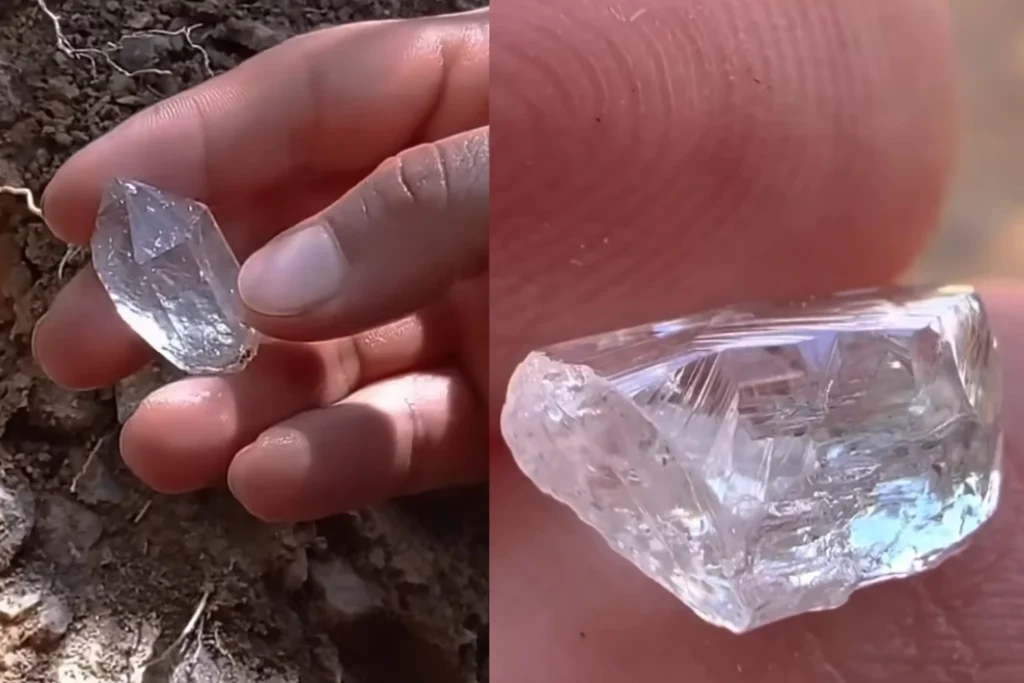
Diamonds are highly durable, but regular care can help maintain their brilliance and keep the jewelry setting secure. Here are a few simple care tips:
- Clean regularly with warm water, mild soap, and a soft brush to remove dirt and buildup
- Avoid harsh chemicals and abrasive cleaners that may damage the metal setting
- Store separately from other jewelry to prevent scratches and damage
- Check the setting periodically by having a jeweler inspect the prongs and make sure the diamond remains secure
With proper care and regular maintenance, an earth-mined diamond can remain beautiful and wearable for generations.
Why To Choose Natural Diamonds For Buying?
There are several reasons why you should choose natural diamonds:
- Heritage and tradition: Diamonds have symbolized love, commitment, and permanence for generations.
- Natural rarity: Unlike lab-grown diamonds, natural diamonds form through geological processes over billions of years and cannot be produced on demand.
- Heirloom appeal: Many natural diamonds are passed down through generations, carrying sentimental significance and, in some cases, financial value.
- Established market: Natural diamonds have a long history in the global jewelry market and remain widely recognized and traded.
For many couples, choosing an earth-mined diamond is about more than its appearance. It can represent a connection to nature, history, and a stone formed long before it became part of their story.
Global Diamond Production
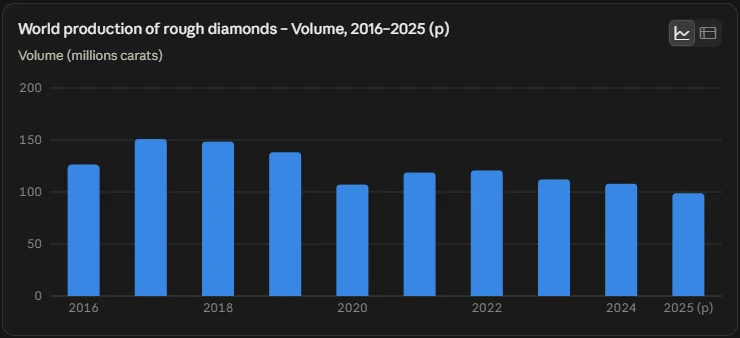
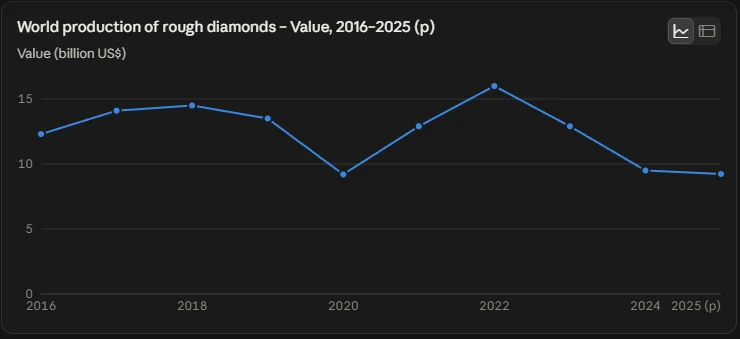
Global mines produced approximately 98.8 million carats of rough diamonds valued at $9.23 billion in 2025, an 8% decline in volume from 2024. This marked the first time global rough diamond production fell below 100 million carats since Kimberley Process records began.
Global diamond production has been trending lower due to the depletion and closure of mature mines, declining ore grades, and reduced output from major producers. In 2025, weaker demand for natural diamonds, competition from lab-grown diamonds, and broader economic and geopolitical uncertainty added further pressure to the market.
For 2026, major producers are continuing to adjust output to market conditions, with global rough diamond production expected to remain under pressure as several large mines approach the later stages of their operational lives.
Carat Basis and Value Basis Production of Diamonds
The global production can be seen in two different aspects for countries; carat basis and value basis.
Carat basis shows how much rough diamond each country produces by weight, while value basis shows how much that production is worth. The two measures differ because rough diamonds vary considerably in quality, size, and market value.
Carat Basis Diamond Production by Countries
By carat/volume; 7 countries accounted for more than 90% of global rough-diamond production. The top seven produced roughly 96% of the world’s 98.8 million carats.
| Ranking | Country | Percentage |
|---|---|---|
| 1 | Russia | 31.9% |
| 2 | Botswana | 15.7% |
| 3 | Angola | 15.4% |
| 4 | Canada | 14.3% |
| 5 | Democratic Republic of the Congo | 9.0% |
| 6 | South Africa | 5.6% |
| 7 | Zimbabwe | 4.3% |
| 8 | Namibia | 2.1% |
| 9 | Lesotho | 0.7% |
| 10 | Sierra Leone | 0.1% |
| – | Other countries | ~0.9% |
| Total | 100.0% |
Value Basis Diamond Production by Countries
By value; 8 countries accounted for more than 90% of global rough-diamond production value.
| Ranking | Country | Percentage |
|---|---|---|
| 1 | Russia | 29.5% |
| 2 | Botswana | 21.4% |
| 3 | Angola | 19.6% |
| 4 | Namibia | 7.8% |
| 5 | Canada | 9.7% |
| 6 | South Africa | 6.5% |
| 7 | Lesotho | 2.5% |
| 8 | Zimbabwe | 1.1% |
| 9 | Democratic Republic of the Congo | 0.5% |
| 10 | Sierra Leone | 0.2% |
| – | Other countries | ~1.2% |
| Total | 100.0% |
This is a change from the 2024 figures, where six countries accounted for 92% by value and seven accounted for 96% by volume.
Conclusion
Natural Diamonds are a great symbol of affection and hold significant value both in hearts and investment if you know how to take care of them. You can consider them if you have enough budget and take care. Just make sure to get proper certificates for validation that you are not getting scammed. You can read the certifications guides as well.