
What is a Lab grown Diamond? Reality, Quality, and Full Guide
A lab-grown diamond is pure crystallized carbon, created in an advanced laboratory using technology that replicates the extreme heat and pressure conditions found deep within the Earth. The result is a genuine diamond with the same crystal structure, hardness, brilliance, and optical properties as a natural diamond.
Core Characteristics of Lab Grown Diamond
- Grading: Lab-grown diamonds can be evaluated by recognized gemological laboratories using the 4Cs—Cut, Color, Clarity, and Carat Weight—to assess their quality.
- Properties: They have the same chemical, physical, and optical properties as natural diamonds, including a Mohs hardness of 10, brilliance, and fire.
- Composition: Lab-grown diamonds are made of pure carbon atoms arranged in the same crystal structure as natural diamonds.
Are Lab-grown Diamonds Real Diamonds?
Yes. Lab-grown diamonds are real diamonds, not simulants such as cubic zirconia or moissanite. They are evaluated by independent gemological laboratories, including the Gemological Institute of America (GIA), International Gemological Institute (IGI), and GCAL by Sarine.
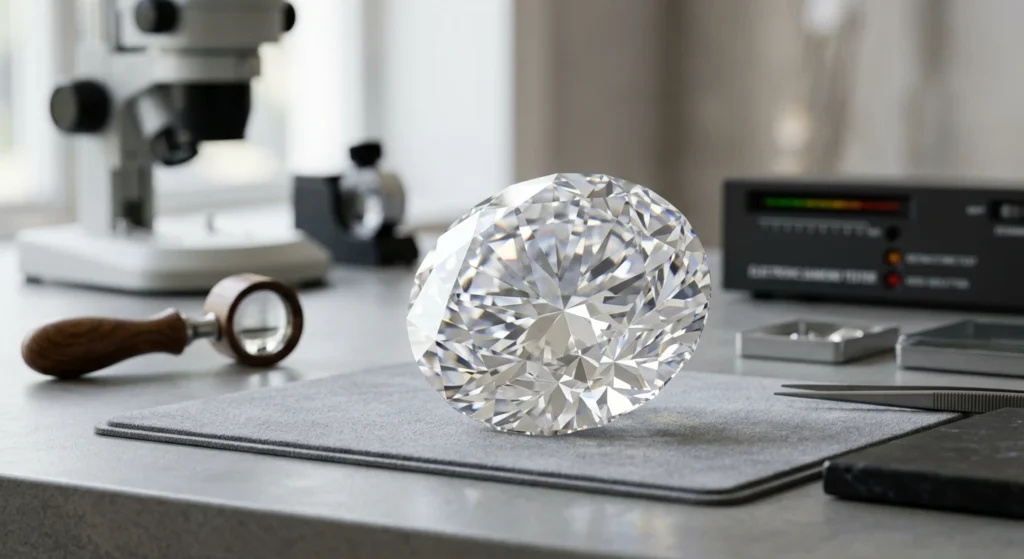
Lab-grown diamonds have the same fundamental physical properties as natural diamonds:
- Hardness: 10 on the Mohs scale, making diamond the hardest naturally occurring mineral.
- Brilliance, fire, and scintillation: They exhibit the same optical properties and sparkle as natural diamonds.
- Durability: They are durable enough for everyday wear and suitable for fine and heirloom jewelry.
- Grading: They can be evaluated based on the 4Cs—cut, color, clarity, and carat weight.
- Certification: Their quality and laboratory-grown origin can be independently documented through grading reports from recognized gemological laboratories.
How are lab grown diamonds created?
According to GIA Distinguished Research Fellow Dr. James Shigley, two main methods are used to create lab-grown diamonds: HPHT and CVD.
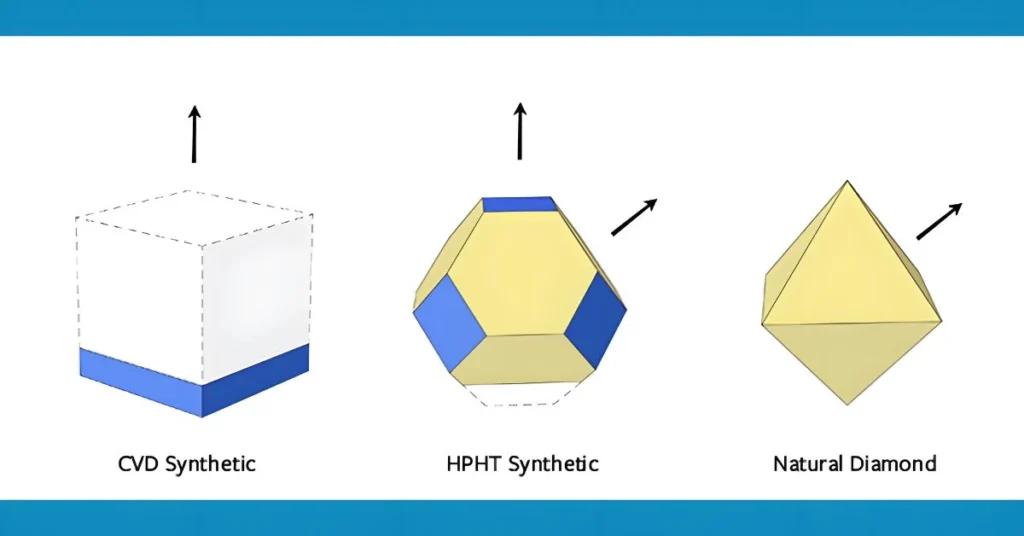
- HPHT Process: The High Pressure High Temperature (HPHT) method recreates the extreme pressure(5-6 GigaPascals) and extreme temperature(1,300°C-1,600°C or 2,370°F- 2,910°F) to match the conditions found deep within the Earth, allowing carbon to crystallize around a diamond seed and grow into a diamond crystal. A lab takes 2-5 weeks while earth takes 1-3.3 billion years to create a diamond in these circumstances
- CVD Process: Chemical Vapor Deposition (CVD) diamonds are grown inside a sealed vacuum chamber filled with carbon-rich gases, typically methane. The gases are heated to extremely high temperatures, causing their molecules to break apart and release carbon atoms. These carbon atoms settle onto a diamond seed and bond to its surface layer by layer, gradually forming the diamond crystal over several weeks.
HPHT vs CVD; Which is better?
| HPHT | CVD |
|---|---|
| Well-suited for smaller stones and specialty shapes | Well-suited for larger carat weights (1 ct+), particularly stones with high clarity |
| Produces beautiful, durable diamonds suitable for everyday jewelry | Often capable of achieving Type IIa classification, one of the purest forms of diamond |
| Can be used for color enhancement and other post-growth treatments | Can produce consistent color in the colorless to near-colorless range |
| Post-growth treatment can be used to improve a diamond’s color and may be applied to both lab-grown and natural diamonds | Commonly used for larger center stones in engagement rings |
Depending on your needs, you can decide which one is better for you.
Can You Tell the Difference Between Lab Grown and Natural Diamonds?
No. A naked eye and appearance alone cannot distinguish a lab-grown diamond from a natural diamond. Lab-grown diamonds have the same brilliance, fire, and visual characteristics as natural diamonds of the same grade.
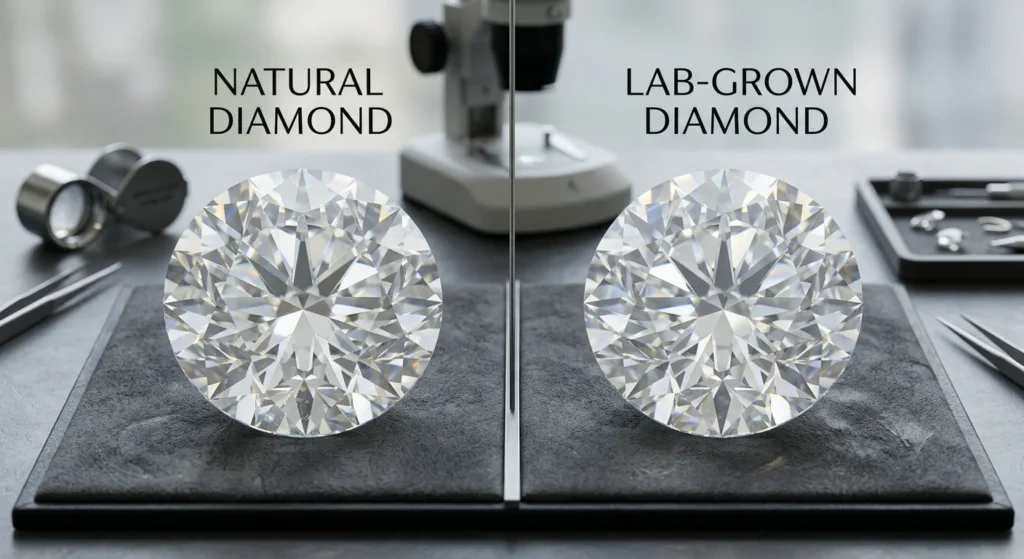
Even trained jewelers and gemologists typically need specialized equipment to determine a diamond’s origin. Gemological laboratories look for subtle characteristics created during the diamond’s growth process.
Some identifying features may include:
- Growth Patterns: Lab-grown diamonds can display growth patterns that differ from those typically found in natural diamonds.
- Inclusions: Natural diamonds may contain mineral inclusions formed during their growth, while lab-grown diamonds can contain inclusions associated with the HPHT or CVD process.
- Laser Inscription: Many lab-grown diamonds have a microscopic inscription on the girdle identifying their laboratory-grown origin and grading report number.
- Advanced Testing: Specialized gemological instruments can analyze features such as growth patterns, fluorescence, and other characteristics to determine whether a diamond is natural or laboratory-grown.
Standard diamond testers generally cannot distinguish lab-grown diamonds from natural diamonds because both have similar thermal and electrical properties.
In summary: Lab-grown and natural diamonds can look identical to the naked eye. Specialized gemological testing is the reliable way to determine a diamond’s origin.
How Are Lab-Grown Diamonds Graded and Certified?
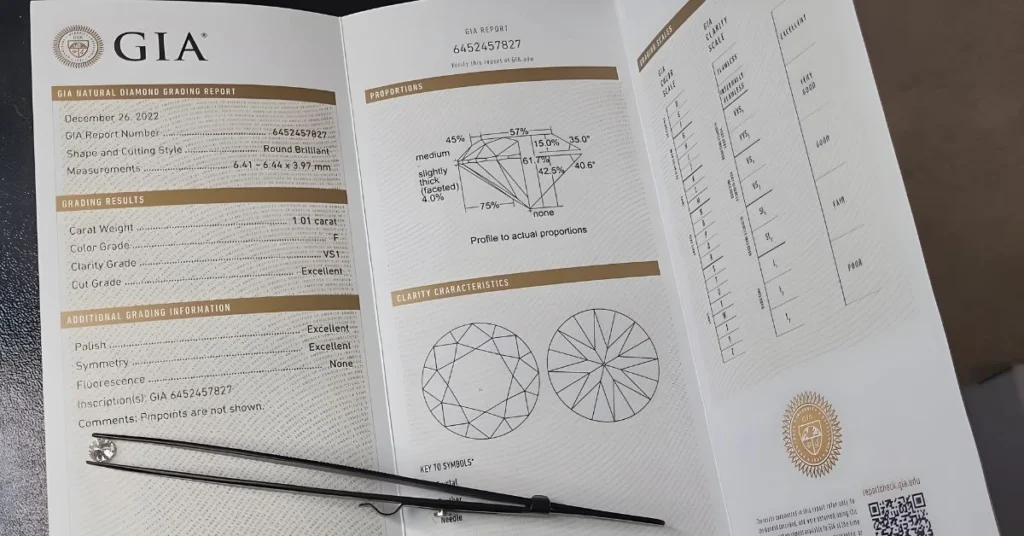
Lab-grown diamonds can be evaluated using the 4Cs; cut, color, clarity, and carat weight – to provide buyers with a standardized way to assess and compare diamond quality.
The three major grading laboratories commonly encountered with lab-grown diamonds are:
- GIA (Gemological Institute of America): One of the most recognized names in diamond grading. Since October 2025, GIA has used a revised grading system for lab-grown diamonds, with updated terminology and quality categories. Earlier GIA lab-grown diamond reports remain valid.
- IGI (International Gemological Institute): A leading grader of lab-grown diamonds that provides detailed information on cut, color, clarity, and carat weight, making its reports useful when comparing individual stones.
- GCAL by Sarine: Provides detailed diamond grading along with optical performance information, giving buyers additional insight into a stone’s light performance and visual appearance.
A grading report from a recognized laboratory provides independent documentation of a lab-grown diamond’s characteristics and origin, helping buyers make more informed comparisons.
How Much Do Lab-Grown Diamonds Cost?
| Carat Weight | Lab-Grown Diamond Price (Loose Stone) | Natural Diamond Price |
|---|---|---|
| 1.00 Carat | $400–$1,500 | $4,000–$6,000 |
| 1.50 Carat | $1,000–$2,000 | $7,500–$11,000 |
| 2.00 Carat | $1,200–$3,500 | $12,000–$20,000 |
| 3.00 Carat | $2,000–$6,000 | $25,000–$45,000+ |
Do Lab-Grown Diamonds Hold Their Value?
Lab-grown diamonds generally do not hold their retail value well, and their resale value can decline significantly over time. Natural diamonds also typically resell for significantly less than their original retail price, so neither lab-grown nor natural diamonds should be viewed as reliable financial investments.
If resale value is your main priority, neither type is a strong investment at the retail level. Lab-grown diamonds can, however, offer greater value for buyers who prioritize size, quality, and appearance within a set budget and plan to enjoy the diamond rather than resell it.
Pros and Cons of Lab Grown Diamonds
| Pros | Cons |
|---|---|
| Lower cost: Typically much less expensive than comparable natural diamonds, allowing buyers to get a larger or higher-quality stone for their budget. | Lower resale value: Lab-grown diamonds generally have limited resale value, and their prices have declined as production has become more efficient. |
| Real diamonds: They have the same carbon composition, crystal structure, hardness, and optical properties as natural diamonds. | Prices can continue to decline: Improvements in technology and increased production may put further downward pressure on retail and resale prices. |
| More size and quality for your budget: Lower prices can make larger carat weights and higher clarity grades more accessible. | Less rarity: Lab-grown diamonds can be produced at scale, so they do not have the natural scarcity associated with naturally formed diamonds. |
| Avoids traditional mining: They are created in controlled facilities rather than extracted through conventional diamond mining, avoiding the land disruption associated with mining. | Energy-intensive production: Growing diamonds requires significant energy, and the environmental impact can vary depending on the energy sources used. |
| Traceable origin: Their laboratory origin can be documented through a grading report and, in many cases, a laser inscription on the girdle. | Limited long-term market history: Lab-grown diamonds have a much shorter history in the jewelry market, making long-term resale trends less established than those of natural diamonds. |
Common Misconceptions About Lab Grown Diamonds
Several common misconceptions about lab-grown diamonds come from confusion about how they compare with natural diamonds. Here are some of the most common:
- Lab-grown diamonds are “fake”: False. Lab-grown diamonds are real diamonds with the same chemical composition, crystal structure, and fundamental physical and optical properties as natural diamonds.
- Lab-grown diamonds look different: False. A lab-grown diamond can be visually indistinguishable from a natural diamond to the naked eye. Specialized equipment is typically required to determine its origin.
- Lab-grown diamonds are less durable: False. Lab-grown diamonds have a Mohs hardness of 10, the same as natural diamonds, making them suitable for everyday jewelry.
- Lab-grown diamonds are flawless: False. Like natural diamonds, lab-grown diamonds can contain inclusions and other clarity characteristics. Their clarity depends on the individual stone and how it was grown.
Is a lab-grown diamond right for you?
A lab-grown diamond may be the right choice if you value:
- Beauty without compromise: Lab-grown diamonds offer the same brilliance, sparkle, and durability as natural diamonds.
- Transparent origins: Their laboratory origin provides a clear and traceable story about how and where the diamond was created.
- Exceptional value: Lower prices can give you more flexibility to choose a larger carat weight, higher clarity, or more elaborate setting within your budget.
- Modern values: Lab-grown diamonds appeal to buyers who prefer a diamond created without traditional mining.
- Independent certification: Reputable laboratories such as GIA, IGI, and GCAL can provide grading reports documenting a lab-grown diamond’s characteristics and origin.
A natural diamond may be a better choice if you place particular importance on geological rarity, natural formation, or owning a diamond formed deep within the Earth over billions of years.
Ultimately, the right choice depends on what matters most to you; price, size, quality, origin, rarity, or personal meaning. Understanding these differences can help you choose the diamond that best fits your priorities and budget.
History of Lab Grown Diamonds
Here is a detailed overview of the history.
Who Started Lab-Grown Diamonds and When?
The first successful lab-grown diamond was created on December 16, 1954, by scientist H. Tracy Hall and a research team at General Electric (GE) after decades of unsuccessful attempts to reproduce the conditions needed for diamond formation. The breakthrough came when a high-pressure, high-temperature process was achieved; that later became known as HPHT.
Historical Timeline
- 1954: GE successfully produces the first reproducible lab-grown diamonds using the HPHT method.
- 1971: The first gem-quality lab-grown diamonds are produced.
- 1980s: Advances in CVD (Chemical Vapor Deposition) technology accelerate the development and commercial production of lab-grown diamonds.
- 2007: GIA begins issuing grading reports for laboratory-grown diamonds.
- 2017: VRAI introduces diamonds that it describes as the world’s first Carbon-Neutral Certified diamonds.
- 2018: The U.S. Federal Trade Commission (FTC) updates its diamond terminology guidance to recognize laboratory-grown diamonds as diamonds.
When Did Laboratory-Grown Gem-Quality Diamonds Begin to Appear on the Jewelry Market?
After General Electric produced the first lab grown diamond in 1954, producing gem-quality stones consistently was difficult and expensive, and many early diamonds had visible inclusions or undesirable colors.
By the 1980s, improvements in diamond-growing technology helped make lab-grown diamonds more commercially available. However, it was not until the 2000s that lab-grown diamond jewelry and engagement rings became significantly more accessible to consumers.
Lab Grown Industry Today
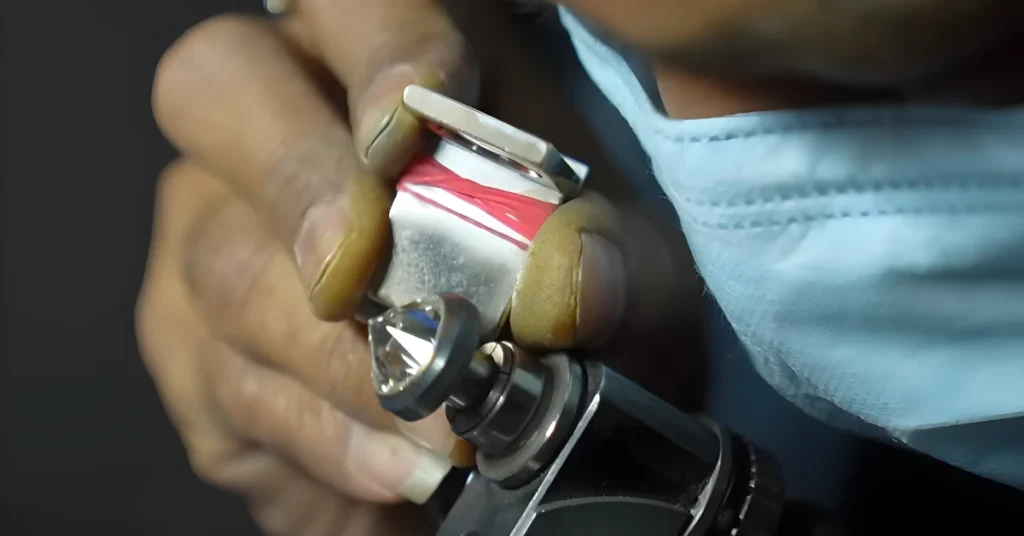
What Country Makes Lab-Grown Diamonds?
The United States produced the first lab-grown diamonds, but today, several countries manufacture them at commercial scale.
China is currently the largest producer of lab-grown diamonds, followed by India and the United States. China has become a major global manufacturing hub due to its large production capacity and advanced diamond-growing technology.
What Is the Biggest Market for Lab-grown Diamonds?
The United States is the world’s largest market for lab-grown diamonds, driven by growing consumer demand for affordable, larger, and high-quality stones. The U.S. market has expanded significantly as lab-grown diamonds have become more widely available and accepted as an alternative to natural diamonds.
Do Most People Buy Lab Diamonds?
Natural diamonds remain the more traditional choice, but lab-grown diamonds have gained significant popularity as technology has improved and prices have become more accessible. Their growing availability has made them an increasingly common option for engagement rings and other fine jewelry.
Summary
Lab grown diamonds are real diamonds that possess the exact same characteristics of mined diamonds. They even pass the diamond tester and cost way more less than their counterparts. If affordability, size, quality, and laboratory origin matter most, a lab-grown diamond can be an excellent choice.
The article covered all the aspects that could be on your mind. If there is still something missing, please let us know in the comments or send us a message.